
AI Behind the Wheel: How Inverted AI’s Scenarios Enrich NVIDIA’s Traffic Data Recipe
Thu Dec 11 2025180 viewsNVIDIA’s Cosmos Cookbook is a powerful resource designed to accelerate AI development, offering "recipes" for complex workflows, such as "Synthetic Data Generation (SDG) for Traffic Scenarios."
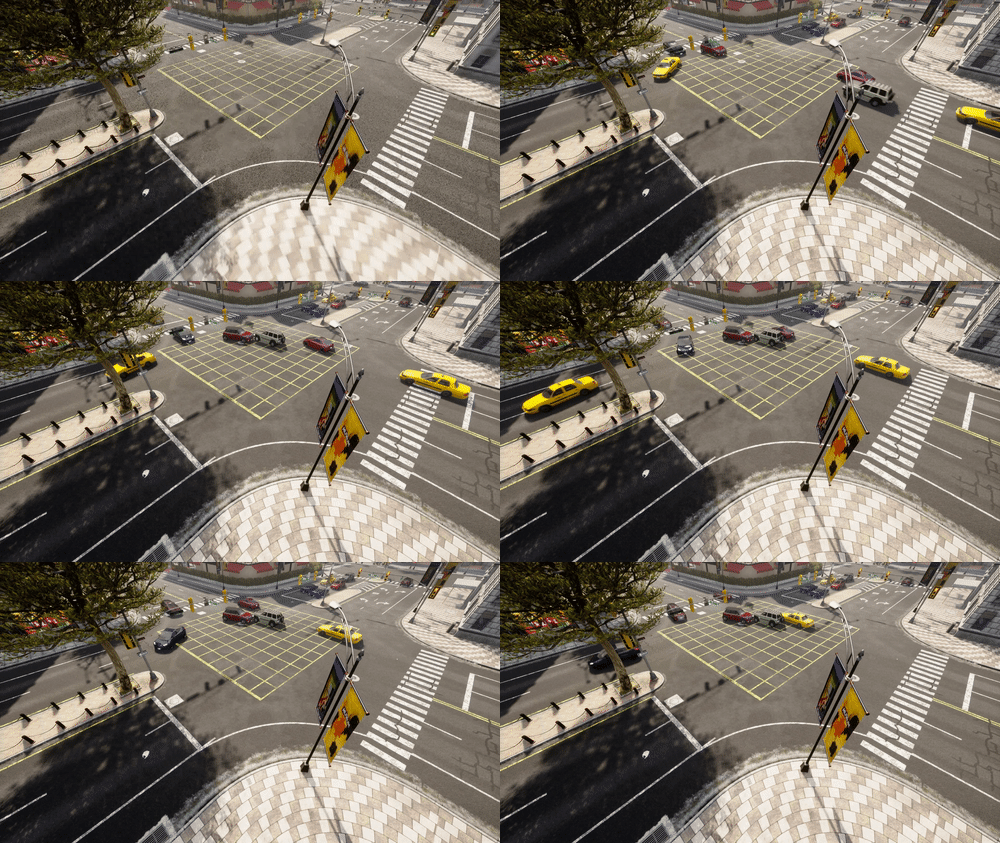
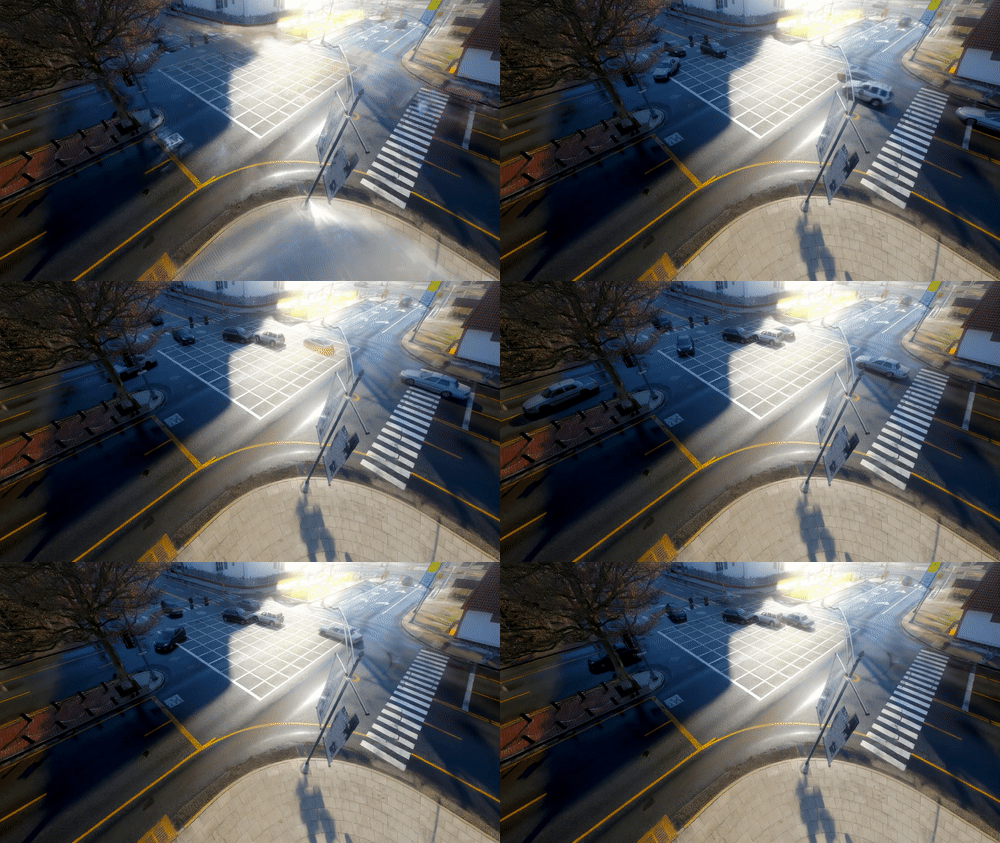
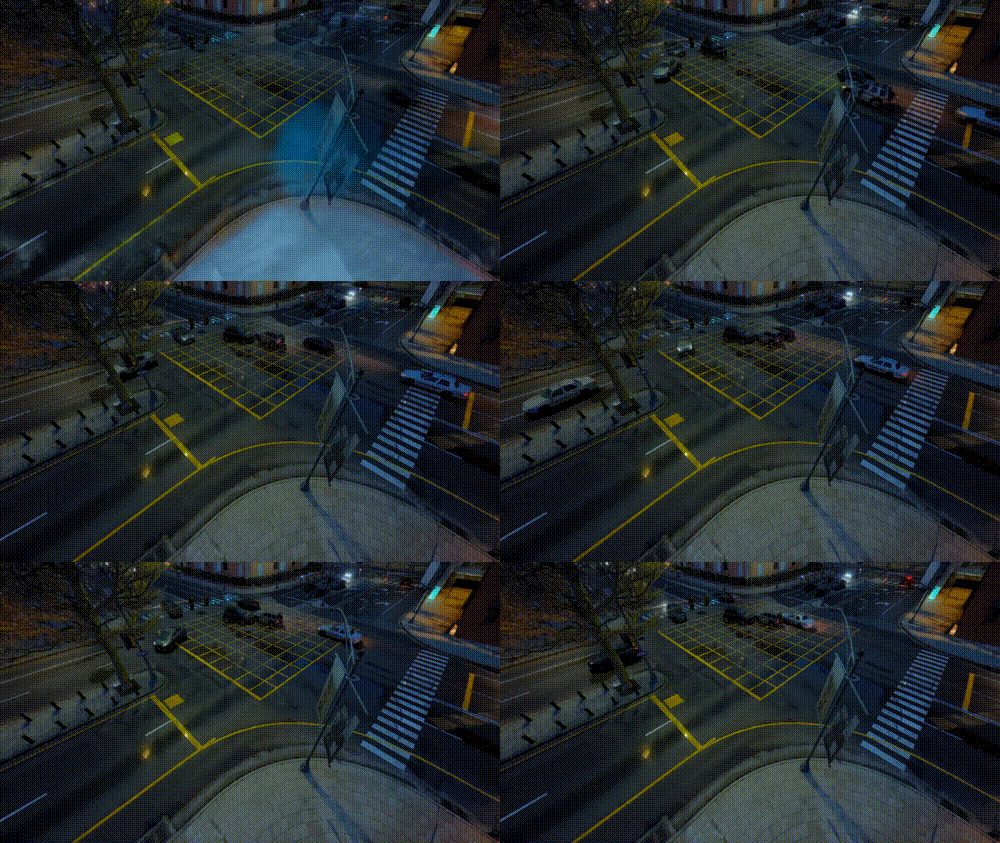
This workflow is an end-to-end solution for creating vast amounts of high-quality, photorealistic video data to train sophisticated perception and Vision-Language Models (VLMs). While NVIDIA provides the cutting-edge AI models for photorealistic augmentation (like Cosmos-Transfer) and the simulation environment (CARLA), there's a vital ingredient that makes the synthetic data useful: realistic, intelligent, and diverse traffic behavior.
This is where Inverted AI comes in.
The Challenge of Synthetic Data Realism
Generating synthetic data for traffic is a three-part challenge:
- Simulation: Creating a virtual environment (CARLA/OpenDrive map).
- Behavioral Realism: Generating agents (cars, pedestrians) that move, interact, and react like real-world actors, including highly complex and rare scenarios (e.g., near-collisions, aggressive lane changes).
- Visual Realism: Making the simulated video look photorealistic (bridging the "sim-to-real" visual gap).
The NVIDIA recipe excels at the first and third steps. But the realism of the final training data depends entirely on the quality of the input traffic scenario logs—the very definition of how all the virtual agents move. If the synthetic agents act unrealistically, the AI model trained on that data will fail in the real world.
Inverted AI’s Special Contribution: Reactive Scenario Logs
Inverted AI’s core contribution to the Cosmos Cookbook recipe is the supply of synthetic, diverse, and realistic scenario log samples.
As noted in the workflow documentation, the overall SDG process starts with Stage 1: Generating Ground Truth with CARLA Simulation. This stage requires Scenario Logs that define the precise movements of all actors. While simple traffic can be randomized, Inverted AI provides the logs for complex, safety-critical, and rare scenarios that are too dangerous or computationally expensive to capture or manually script.
What Makes Inverted AI’s Logs Special?
The difference lies in their AI-driven approach to agent behavior. The logs, examples of which are provided via the inverted-ai/metropolis GitHub repository for the recipe, are distinguished by three key characteristics:
- Realistic and Reactive Agents: Unlike traditional scripted simulations where agents follow simplistic or non-reactive paths, Inverted AI’s logs feature agents that act and react based on a sophisticated understanding of human driving behavior. This means the resulting video contains genuine, complex traffic interactions and incidents.
- Access to Rare Scenarios: The technology enables targeted generation of specific, critical events on demand—such as collisions, wrong-way driving, or aggressive cut-offs. These "corner cases" are essential for safely training autonomous vehicles and anomaly detection systems in smart cities, yet they are very expensive to collect naturally.
- Scalability: By providing logs generated to the exact specifications of the desired rare event, Inverted AI removes the scalability constraint that plagues manual scenario creation. This allows developers to easily access high-quality behavioral data to fine-tune their perception models quickly.
Bridging the Behavioral and Visual Domain Gaps
In the NVIDIA recipe, Inverted AI’s data feeds directly into the pipeline:
- The Inverted AI Scenario Logs define the realistic movement.
- The CARLA Simulator generates the ground truth video and additional modalities (bounding boxes, segmentation) based on that movement.
- The Cosmos-Transfer model takes that behaviourally realistic, yet visually synthetic, video and produces a photorealistic, "sim-to-real" video.
By providing the initial high-quality, behaviorally sound synthetic data, Inverted AI ensures that the resulting visually stunning photorealistic data is behaviorally robust, directly accelerating the sim-to-real transfer and making the final training dataset truly valuable.
In short, NVIDIA provides the tools to make the data look real and Inverted AI provides the expertise to make the synthetic traffic act real. This collaboration ensures the Cosmos Cookbook SDG recipe is not just scalable, but fundamentally effective for training the next generation of intelligent transportation systems.
Questions
Please connect with us at info@inverted.ai with any questions about this blog.

